

Why Thailand Is Becoming A Serious Second Base For International Families

For many international families, Thailand is no longer viewed only as a leisure destination. It is increasingly being considered as a serious second base: a place where lifestyle, healthcare, regional access, family mobility, and long-term planning can be brought together with the right advisory structure.
This shift reflects a broader change in how globally minded families think about residence. A second base is not simply a holiday home or occasional place of retreat. It can support continuity, optionality, healthcare access, family gatherings, business travel, and a more resilient way of living across jurisdictions.
For families with international assets, advisers, businesses, and next-generation priorities, Thailand can offer more than convenience. It can become part of a structured long-term presence in Southeast Asia.
What Does A “Second Base” Mean?
A second base is different from a relocation.
Relocation often implies leaving one country for another. A second base is more strategic. It allows a family to maintain existing homes, business interests, adviser relationships, and citizenship ties while creating a meaningful, practical presence in another jurisdiction.
For private families, a second base may include:
- Long-term residency planning
- A residence or carefully selected property
- Healthcare and wellness access
- Family travel and seasonal living
- Regional business connectivity
- Education or next-generation exposure
- Banking, reporting, and adviser coordination
- Lifestyle support through trusted partners
The goal is not only to spend time in Thailand. The goal is to create a base that supports the family’s wider life.
Why Thailand Is Entering The Conversation
Thailand holds a particular position in Asia.
It combines regional connectivity, developed private healthcare, hospitality infrastructure, international lifestyle familiarity, and cultural depth. Bangkok, in particular, offers the practical advantages of a major city while remaining connected to resort, wellness, and family-oriented destinations across the country.
For families considering a Southeast Asia base, Thailand may appeal because it can serve several roles at once: a residence, a healthcare destination, a family gathering point, a retirement option, a lifestyle base, and a regional gateway.
This multi-dimensional value is what makes Thailand relevant to strategic family planning.
Residency Pathways Have Become More Structured
One reason Thailand has become more relevant for long-term planning is the development of clearer residency pathways.
The Thailand Long-Term Resident Visa, or LTR Visa, is overseen by Thailand’s Board of Investment and is designed for four main applicant groups:
- Wealthy Global Citizens
- Wealthy Pensioners
- Work-from-Thailand Professionals
- Highly Skilled Professionals
The official LTR program also allows eligible spouses and children to apply as dependents, subject to the program’s requirements.
For private clients, the significance of the LTR Visa is not only the ability to stay longer. It is the ability to plan with a more stable framework. Families can begin to think about residence, property, healthcare, lifestyle, tax residence considerations, and adviser coordination in a more structured way.
The requirements are specific and should be reviewed carefully. Families should not assume eligibility without checking the official criteria and obtaining the appropriate professional advice.
Healthcare And Wellness Are Serious Considerations
Healthcare is one of Thailand’s strongest second-base advantages.
Thailand has long invested in medical and wellness positioning. The Thai government’s medical hub policy has aimed to develop the country as a center for medical and wellness services, supported by infrastructure, facilities, and service development.
For international families, healthcare access can be a practical driver of second-base planning. This may include routine care, specialist treatment, annual check-ups, wellness programs, recovery stays, and coordinated support for older family members.
Healthcare planning is especially relevant for families thinking about retirement, multi-generational living, or a long-term Thailand presence. The question is not only where to live, but where a family can be properly supported when needs become more personal.
Bangkok As A Regional Gateway
A second base must be connected.
Bangkok’s aviation infrastructure is one of Thailand’s practical strengths. Suvarnabhumi Airport is Thailand’s primary international gateway, while Don Mueang also serves regional and low-cost traffic. Airports of Thailand has also publicly positioned Thailand’s aviation development around regional and global hub ambitions.
For families moving between Europe, the Middle East, India, China, Southeast Asia, and Australia, Bangkok’s connectivity can make Thailand a practical base rather than an isolated destination.
This matters for families whose lives are distributed across homes, business interests, family members, advisers, schools, and investment markets.
Lifestyle With Infrastructure, Not Only Atmosphere
Thailand’s appeal is often described through lifestyle. For private families, however, lifestyle alone is not enough.
A serious second base requires infrastructure.
This may include quality housing, private healthcare, international schools, domestic travel, banking access, legal support, property management, household staffing, security awareness, transport, wellness facilities, cultural familiarity, and trusted service partners.
Thailand’s strength is that lifestyle and infrastructure can sit close together. A family may use Bangkok for healthcare, business meetings, residence management, and connectivity, while also accessing destinations such as Phuket, Chiang Mai, Hua Hin, or Samui for family time, recovery, or seasonal living.
The opportunity is not simply to enjoy Thailand. It is to organize life in Thailand properly.
The Role Of Property
For many families, the second-base conversation eventually turns to property.
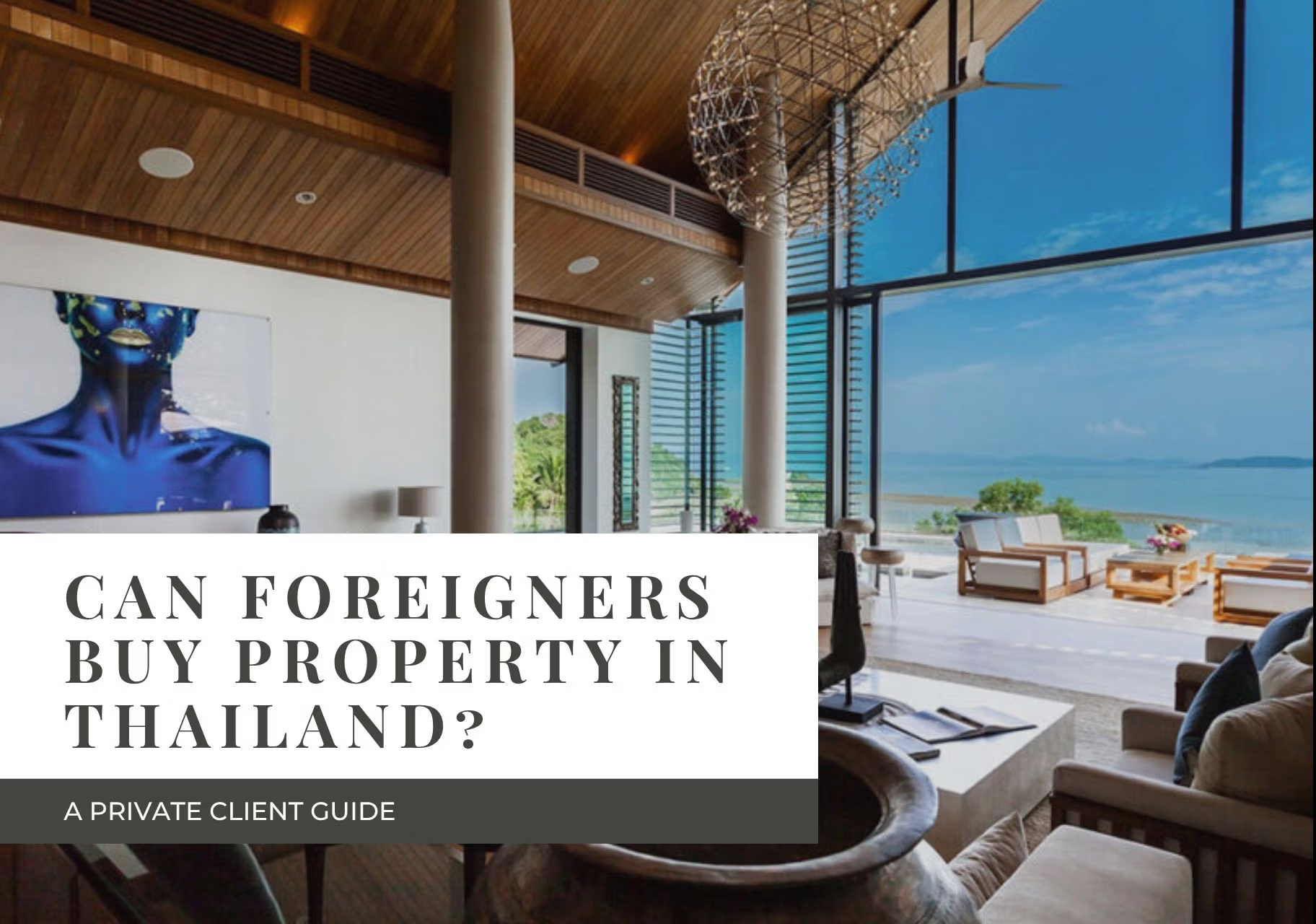
This should be approached carefully. Foreigners may generally own condominium units within the permitted foreign quota, while land ownership is more restricted and requires legal review. Leasehold, company structures, residence planning, and investment-linked property decisions each carry different considerations.
A property purchase should not be treated only as a real estate transaction. For families, it may connect to residency, succession, tax reporting, lifestyle use, family governance, and long-term management.
The right question is not “Which property should we buy first?” It is “What role should Thailand play in the family’s wider structure?”
Tax, Reporting, And Compliance Should Be Reviewed Early
A second base can create new tax and reporting questions.
Time spent in Thailand, foreign-source income, ownership structures, banking, investment flows, property purchases, and family office reporting can all have implications. These questions should be reviewed by qualified tax and legal advisers in the relevant jurisdictions before major decisions are made.
For HNWI and UHNWI families, compliance is not a secondary issue. It is part of long-term confidence.
Privacy should also be framed carefully. A family may value discretion, but discretion should sit within proper legal, tax, and reporting standards.
Why Coordination Matters
Families often begin with separate questions:
- Which visa should we consider?
- Should we buy or rent?
- Where should we live?
- Which hospital should we use?
- What happens if family members spend more time in Thailand?
- Who manages the property when we are away?
- How does this affect succession planning?
- Which advisers should be involved?
Each question is valid. The challenge is that the answers are connected.
This is where adviser-led coordination becomes important. A second base becomes more effective when residency, wealth structuring, property, healthcare, lifestyle, and reporting are reviewed together rather than handled as isolated tasks.
Thailand As A Complementary Base
For globally minded families, Thailand does not need to replace existing homes, citizenships, or business centers.
Its value may be complementary.
A family may retain its primary base in Europe, the Middle East, Hong Kong, Singapore, China, or elsewhere, while using Thailand as a long-term Asia-Pacific residence, wellness destination, family gathering point, or lifestyle and continuity base.
This is the essence of strategic optionality. Thailand can become one part of a wider family map.
The Role Of L’Heritage
L’Heritage helps globally minded families consider Thailand through a family-office lens.
That means looking beyond single-service questions. Residency, property, healthcare, lifestyle coordination, investment exposure, private reporting, and succession planning should be aligned with the family’s long-term objectives.
For families considering Thailand as a second base, the first step is not necessarily an application, purchase, or move. It is a clear advisory conversation about what Thailand is meant to support.
For families considering Thailand as part of a long-term residence, lifestyle, or family continuity strategy, L’Heritage offers a discreet advisory discussion to help clarify priorities, identify key planning considerations, and coordinate the appropriate professional guidance.
References
- Thailand BOI LTR Visa Official Website
- Thailand.go.th: Long-Term Resident Visa Requirements
- Thailand.go.th: Thailand Medical Hub
- Thailand.go.th: Development Of Information And Data System To Support Thailand Medical Hub
- Airports Of Thailand / PRD: Thailand As A Global Aviation Hub
- Suvarnabhumi Airport: Airline Information