


Thailand LTR Visa: A Strategic Residency Pathway for Global Families

Thailand LTR Visa: A Strategic Residency Pathway for Global Families
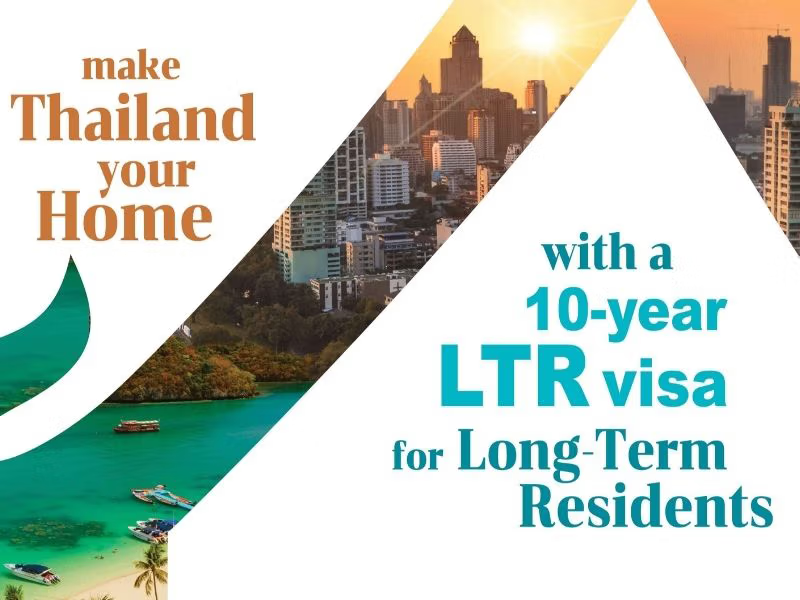
For globally minded families, residency is no longer a simple question of where to live. It is increasingly connected to mobility, investment planning, family continuity, healthcare access, tax residence considerations, and the ability to create a stable second base in a changing world.
Thailand’s Long-Term Resident Visa, commonly known as the Thailand LTR Visa, was introduced to attract high-potential foreign residents, investors, retirees, professionals, and families seeking a longer-term connection with Thailand.
For the right family, the LTR Visa can be more than an immigration document. It can become part of a broader strategy for establishing a structured presence in Thailand and Southeast Asia.
What Is The Thailand LTR Visa?
The Thailand LTR Visa is a long-term residency program overseen by Thailand’s Board of Investment. According to the official LTR program, it is designed for four main applicant groups:
- Wealthy Global Citizens
- Wealthy Pensioners
- Work-from-Thailand Professionals
- Highly Skilled Professionals
Spouses and children of LTR Visa holders may also be eligible to apply under the dependent category, subject to the official criteria in force at the time of application.
The program is designed for applicants who can demonstrate the required financial, investment, employment, insurance, or professional qualifications. These requirements should be reviewed carefully before any application decision is made.
Why The LTR Visa Matters For Global Families
For HNWI and UHNWI families, residency planning is rarely isolated. A family may be considering Thailand because of lifestyle, healthcare, education, property, regional connectivity, or a desire for greater long-term optionality.
The LTR Visa can support this planning by giving qualified applicants a more stable framework for staying in Thailand over time.
For families with international assets, operating businesses, or multiple homes, this matters. Short-term arrangements may be sufficient for travel, but they may not provide the continuity needed for serious long-term planning.
Key Benefits To Understand
The official BOI communications describe several LTR benefits, including long-term visa validity, multiple-entry access, work permit facilitation for eligible applicants, and modified reporting requirements.
For some categories, tax-related benefits may also be available under specific legal conditions. These should never be treated as automatic. Families should review tax residence, foreign-source income, employment income, treaty position, and reporting obligations with qualified tax advisers before relying on any tax treatment.
For private clients, the most important benefit is often not only the visa duration. It is the ability to plan with more clarity.
Who May Consider The LTR Visa?
The LTR Visa may be relevant for several family profiles.
Wealthy global families may consider it when they already have meaningful assets and wish to create a more structured presence in Thailand.
Retirees or semi-retired principals may consider it when Thailand forms part of their long-term lifestyle, healthcare, or family mobility plan.
Entrepreneurs and executives may consider it where their professional life allows Thailand to become a base while maintaining international business interests.
Families with dependents may consider it when long-term planning involves a spouse, children, schooling, residence arrangements, healthcare, and family continuity.
The right pathway depends on the applicant’s personal facts. Wealth, income, investment, insurance, employment status, and family structure all need to be reviewed carefully.
Why Families Should Not Treat Residency As A Standalone Decision
Residency affects more than permission to stay.
A family considering Thailand should also review:
- Tax residence and reporting exposure
- Global asset ownership structures
- Property acquisition and holding considerations
- Banking and documentation requirements
- Healthcare and insurance planning
- Family governance and succession objectives
- Education, residence, and lifestyle coordination
- Adviser roles across jurisdictions
This is where many families experience fragmentation. One adviser may handle immigration. Another may handle tax. Another may assist with property. Another may manage banking or investment matters.
For sophisticated families, the real value lies in coordination.
Thailand As A Strategic Second Base
Thailand’s appeal is not only lifestyle. For many families, it offers a practical combination of regional connectivity, healthcare infrastructure, urban convenience, cultural depth, and long-term livability.
Bangkok provides access to private healthcare, international education, hospitality infrastructure, business networks, and regional travel. For families with interests across Asia, Thailand can function as a complementary base rather than a replacement for existing homes or business centers.
The LTR Visa supports this idea when used as part of a wider plan: not simply “moving to Thailand,” but building a considered base for family, capital, and continuity.
Questions To Ask Before Applying
Before pursuing the Thailand LTR Visa, families should ask:
- Which LTR category best matches the family’s situation?
- Are the financial, investment, employment, and insurance requirements clearly met?
- Should the applicant apply individually or as part of a family plan?
- How will Thailand residence affect tax and reporting obligations?
- Should property, banking, or investment decisions be made before or after the visa process?
- Which advisers should be involved before documents are submitted?
- How does the residency plan connect with succession, lifestyle, and family governance?
These questions help move the conversation from application preparation to strategic planning.
The Role Of L’Heritage
L’Heritage views residency planning as one part of a broader family strategy.
For families considering Thailand, the objective is not only to obtain a visa. It is to understand how residency connects with wealth structuring, property decisions, investment exposure, private-client lifestyle coordination, and long-term family continuity.
A structured advisory process can help families identify the right sequence of decisions, coordinate qualified advisers, and avoid treating each workstream in isolation.
The Thailand LTR Visa can be an important pathway for families who see Thailand as part of their long-term future. But its value is strongest when placed within a wider framework: residency, capital, governance, lifestyle, compliance, and continuity. For globally minded families, Thailand is not only a destination. With the right planning, it can become a structured presence.
For families considering Thailand as a long-term base, L’Heritage offers a discreet advisory discussion to help clarify residency priorities, family requirements, and the professional coordination needed before moving forward.
References
- Thailand BOI LTR Visa Official Website
- BOI LTR Visa Issuance Information
- BOI LTR Required Documents
- BOI Press Release On LTR Benefits And Criteria
- Thailand.go.th LTR Tax Payment Overview
- Thailand.go.th Tax Guidelines For Long-Term Foreign Residents
Note: LTR criteria and tax treatment can change. This draft is written for general educational content and should be reviewed against the latest BOI, immigration, and Revenue Department guidance before publication.