

Healthcare, Wellness, and Private Client Coordination in Thailand
For many international families, healthcare is one of the most personal considerations in long-term planning.
A family may first consider Thailand for lifestyle, climate, property, residency, or regional access. Yet over time, healthcare and wellness often become central to the decision. Routine medical care, specialist consultations, annual check-ups, recovery stays, longevity programs, and support for older family members can all influence whether Thailand becomes a meaningful second base.
For private clients, the real value is not only access to healthcare. It is the ability to coordinate healthcare, wellness, residence, travel, privacy, and family support with care and discretion.
Thailand’s Position In Healthcare And Wellness
Thailand has spent many years developing its position as a medical and wellness destination.
The Thai government has publicly promoted the country as a medical and wellness hub, with policies focused on healthcare services, wellness tourism, medical innovation, traditional Thai wellness, and health-related investment.
Thailand.go.th notes that Thailand’s health economy was valued at more than 1.4 trillion baht in 2023, with the country advancing a Global Health Hub strategy for 2025-2034.
For international families, this matters because healthcare planning is not only about treatment. It is about infrastructure, continuity, and confidence.
Why Healthcare Matters For Global Families
Healthcare becomes more important when a family’s life is spread across jurisdictions.
A family may have a primary home in Europe, the Middle East, Hong Kong, Singapore, China, or elsewhere, while spending increasing time in Thailand. In this context, the family may need to consider:
- Annual health screenings
- Specialist consultations
- Dental care
- Preventive medicine
- Recovery after treatment
- Wellness and longevity programs
- Support for elderly parents
- Medical travel logistics
- Insurance and documentation
- Emergency planning
- Language and appointment coordination
These are not only medical questions. They are family office questions, because they affect time, privacy, mobility, cost, documentation, and family confidence.
Medical Travel Is Becoming More Coordinated
Thailand’s healthcare ecosystem increasingly recognizes that international patients often need support beyond the hospital appointment.
The Tourism Authority of Thailand’s medical travel promotion for 2026, for example, describes medical travel and recovery packages that may include hospital appointment coordination, doctor or specialist consultation booking, hotel accommodation, airport transfers, transport to appointments, recovery planning, and local support.
For private clients, this confirms an important trend: healthcare is becoming more integrated with travel, accommodation, recovery, wellness, and personal coordination.
The opportunity for families is to approach this carefully, with medical decisions made by qualified doctors and logistical support handled by trusted coordinators.
Wellness As Part Of Long-Term Presence
Wellness should not be treated only as leisure.
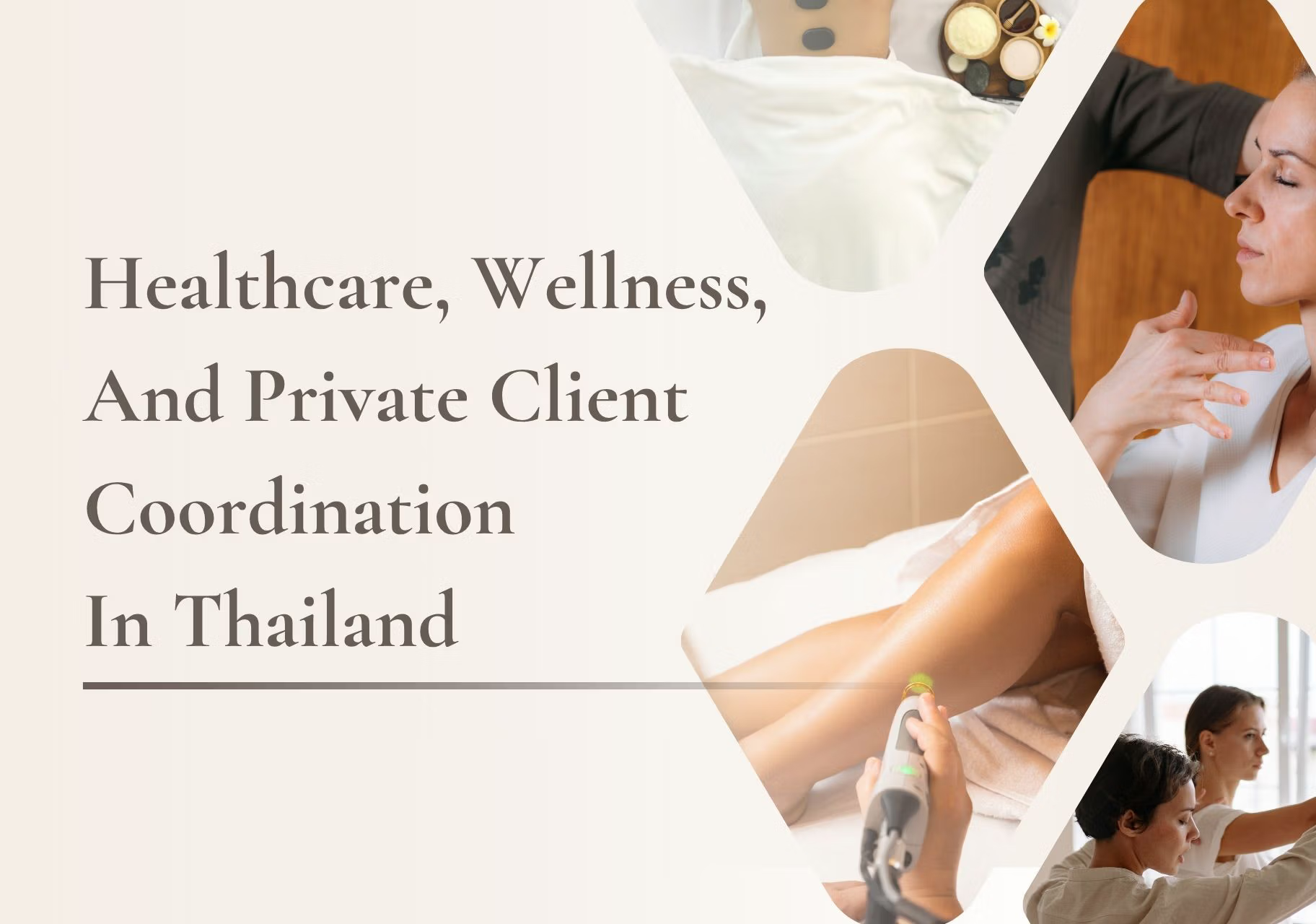
For many families, wellness is connected to prevention, resilience, ageing well, recovery, mental clarity, mobility, and quality of life. Thailand’s wellness offering includes medical spas, health resorts, traditional Thai wellness practices, rehabilitation programs, nutrition, sleep recovery, and longevity-oriented services.
Thailand.go.th states that Thailand is developing medical spa, health resort, and long-term wellness stay services as part of its Global Health Hub direction.
For globally minded families, this can support a more thoughtful second-base strategy. Thailand may become a place for annual check-ups, recovery periods, family wellness stays, or preventive health planning.
The Difference Between Concierge And Private-Client Coordination
There is a difference between booking appointments and coordinating a private-client healthcare journey.
A concierge may assist with a reservation or transfer. Private-client coordination looks at the wider context.
This may include:
- Understanding the family’s preferences and privacy requirements
- Coordinating hospital appointments and wellness stays
- Aligning travel dates with recovery needs
- Supporting accompanying family members
- Managing transport, residence, and accommodation logistics
- Keeping documentation organized
- Coordinating with insurers or advisers where appropriate
- Ensuring sensitive information is handled with consent
- Reviewing how healthcare planning fits with long-term residence in Thailand
The point is not to interfere with medical advice. Medical advice must remain with qualified physicians and hospitals. The role of coordination is to reduce friction around the experience and help the family move through it with clarity.
Planning For Older Family Members
Healthcare and wellness planning is especially important for families with older parents or senior principals.
Thailand may be considered for retirement, seasonal living, specialist care, rehabilitation, dental treatment, wellness stays, or simply a more comfortable rhythm of life. In these cases, the practical details matter deeply.
Families may need to consider:
- Proximity to hospitals
- Mobility support
- Residence layout
- Emergency contacts
- Medication availability
- Insurance coverage
- Companion or caregiver arrangements
- Language support
- Transport reliability
- Family communication protocols
For HNWI and UHNWI families, these details should be planned before they become urgent. A calm plan is always better than a rushed arrangement.
Privacy, Consent, And Medical Sensitivity
Healthcare is one of the most sensitive areas of private-client service.
Families should be careful about who handles medical information, how appointments are arranged, how records are shared, and what level of detail is disclosed to advisers, staff, hotels, drivers, or external partners.
Discretion is not secrecy. It is the careful handling of personal information within proper boundaries.
Any coordination around healthcare should be based on clear consent, appropriate documentation, and respect for medical confidentiality. Families should also work directly with qualified medical providers for diagnosis, treatment, and clinical decisions.
Healthcare And Residency Planning
Healthcare can also connect with residency decisions.
Long-term visa pathways, including Thailand’s LTR Visa, may include health insurance or financial requirements depending on the applicant category. Families considering Thailand as a second base should therefore review healthcare, insurance, residency, and tax residence considerations together.
The question is not only “Which hospital should we use?” It is also:
- How long will the family spend in Thailand each year?
- What healthcare access is needed during that time?
- Does the residency pathway require specific insurance?
- Are older family members included in the plan?
- Should property selection consider hospital proximity?
- What happens in an emergency?
- Who coordinates care when the principal is travelling?
These questions turn healthcare from a service topic into a strategic planning topic.
Thailand As A Recovery And Wellness Base
Thailand’s appeal for recovery and wellness is partly practical.
International families may value high-quality hospitality, private transport, serviced residences, wellness resorts, specialist clinics, and the ability to recover in a calmer environment. Bangkok, Phuket, Chiang Mai, Hua Hin, and Samui each offer different forms of healthcare, wellness, and lifestyle infrastructure.
However, families should avoid choosing based only on image or reputation. The right location depends on the medical need, doctor availability, recovery timeline, family support, transport requirements, and privacy preferences.
For private clients, the most suitable plan is rarely generic. It should be designed around the person, the family, and the purpose of the stay.
What Families Should Review Before Planning Healthcare In Thailand
Before arranging healthcare, wellness, or recovery support in Thailand, families should review:
- The medical objective
- Hospital or clinic credentials
- Doctor or specialist suitability
- Insurance coverage and payment process
- Estimated recovery time
- Accommodation requirements
- Transport and mobility needs
- Family member support
- Medical documentation and translation needs
- Emergency contacts
- Privacy and consent protocols
- Follow-up care after leaving Thailand
These points help families avoid treating healthcare travel as a simple booking exercise.
The Role Of L’Heritage
L’Heritage views healthcare and wellness coordination as part of a broader private-client presence in Thailand.
For families considering Thailand as a second base, healthcare may connect with residency, property, lifestyle management, family governance, elder care, and long-term continuity.
L’Heritage can help families clarify priorities, coordinate trusted partners, and ensure that healthcare and wellness arrangements are considered within the wider family plan. Medical decisions remain with qualified healthcare professionals; the value of L’Heritage is in the discreet coordination around the family’s broader needs.
Healthcare and wellness are deeply personal. For international families, they are also strategic. Thailand’s strength lies not only in hospitals, wellness retreats, or medical travel programs. Its deeper value is the possibility of combining healthcare access, recovery, residence, lifestyle, and family support into one structured presence. F
For families considering healthcare, wellness, or recovery planning as part of a long-term Thailand presence, L’Heritage offers a discreet advisory discussion to help clarify priorities and coordinate the right professional and private-client support.
References
- Thailand.go.th: Thailand, A Global Health Hub
- Thailand.go.th: Thailand Medical Hub
- Thailand.go.th: Thailand And The Goal Of Becoming Thailand Medical Hub
- Tourism Authority Of Thailand: Medical Travel & Recovery Packages In Thailand
- Thai Government: Thailand Medical Tourism 2026 Announcement
- PRD Thailand: Driving Thailand To Become Sustainable Global Wellness Hub